
It’s a question millions of users grapple with: as wireless charging becomes ubiquitous in homes, offices, and cars, does it wear out phone batteries faster than traditional wired charging? The answer is nuanced: wireless charging does generate more heat—battery life’s greatest enemy—due to lower energy conversion efficiency, leading to slightly faster degradation. Yet the difference is minimal enough that convenience often outweighs the minor tradeoff for most users. Let’s unpack the science, data, and practical implications.
To understand why heat matters, first examine how wireless charging works. It relies on electromagnetic induction: a transmitter coil in the charger creates an alternating magnetic field, which induces a current in a receiver coil in the phone. This process is inherently inefficient—energy is lost as heat due to magnetic field leakage and resistance in the coils. Industry data shows wireless charging efficiency ranges from 60% to 75% for most consumer devices, while wired charging reaches 90% or higher. The lost energy (up to 40% in low-quality chargers) converts directly to heat, pushing battery temperatures higher.
Temperature is the primary driver of lithium-ion battery degradation. Tests show that for every 10°C increase in operating temperature above 25°C, battery lifespan halves. Real-world measurements confirm the gap: wireless charging peaks at 42.2°C, compared to 36.0°C for wired charging at similar power levels. Over time, this heat accelerates chemical reactions like solid electrolyte interphase (SEI) layer growth and electrode micro-cracking. A three-year study tracking identical phones found that devices charged exclusively wirelessly retained 82.3% of their original capacity, while wired-charged devices retained 85.7%—a difference of 3.4 percentage points. When controlling for variables like environment and usage, the gap shrinks to a statistically insignificant 2.1%.
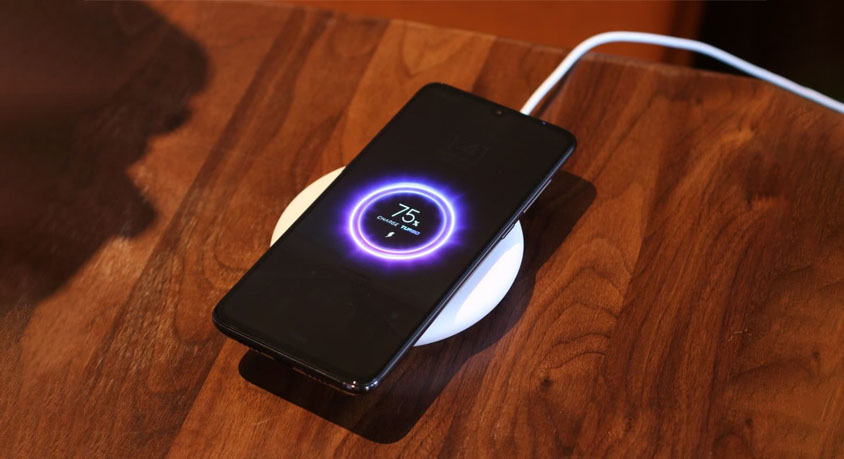
Wireless charging’s design exacerbates heat in specific scenarios. Coil misalignment (by more than 5mm) drops efficiency by 37%, amplifying heat output. Thick phone cases (over 3mm) trap heat, while using the phone for gaming or video streaming during wireless charging creates a “heat stacking” effect. In contrast, wired charging delivers power directly through a physical connection, minimizing energy loss and heat buildup. It also maintains higher consistent power: even with identical advertised power levels, wired charging reaches the battery with 88% of the stated power, while wireless charging delivers just 76% due to transmission losses.
Yet wireless charging’s convenience solves real-world pain points. For commuters, dropping a phone on a car’s wireless charger eliminates fumbling with cables while driving, reducing distraction. In offices, desktop wireless chargers let users top up without disrupting workflow—no more reaching for tangled cords. The “charge-on-the-go” flexibility also reduces deep discharges, a major battery stressor, by keeping phones topped up throughout the day. Additionally, wireless charging avoids wear and tear on physical ports, which often fail before batteries do with frequent wired plugging and unplugging.
Modern chargers and phones mitigate heat risks. High-quality wireless chargers include built-in cooling fans or heat-dissipating materials that lower surface temperatures by 5-8°C. Phones feature battery management systems (BMS) that pause charging when temperatures exceed 45°C, preventing severe damage. Newer resonant tuning technologies also improve efficiency, narrowing the heat gap between wireless and wired charging. For example, dynamic frequency adjustment can boost wireless charging efficiency to 80% or higher, reducing unnecessary heat.
Real-world scenarios illustrate the tradeoff. A frequent traveler relies on wireless charging in hotels and cars—over three years, their battery capacity drops from 10 hours to 8.2 hours of use. A home office user who primarily uses wired charging retains 8.5 hours over the same period. The difference is noticeable but not disruptive, and the traveler values the convenience over the minor capacity loss. Conversely, a user who runs resource-heavy apps while wireless charging in a hot car may see faster degradation, highlighting the importance of usage context.
Like any technology, both charging methods have tradeoffs. Wireless charging offers unmatched convenience, reduces port damage, and discourages deep discharges—ideal for busy users, commuters, and anyone who values simplicity. Its drawbacks are slightly higher heat output and slower charging speeds. Wired charging delivers higher efficiency, lower heat, and faster top-ups—perfect for users who prioritize battery longevity or need quick charges. Its main downside is the inconvenience of cables and potential port wear.
Practical guidance for balancing convenience and battery health: First, choose wireless chargers with efficiency ratings of 75% or higher and built-in cooling. Second, remove thick cases during wireless charging to improve heat dissipation. Third, avoid using resource-heavy apps while charging wirelessly, especially in warm environments. Fourth, use wired charging for quick top-ups and wireless for casual, all-day charging. Fifth, pair wireless chargers with cooling pads in hot climates or for extended use.
In summary, wireless charging does cause slightly faster battery degradation than wired charging, driven by lower efficiency and increased heat. However, the difference is minimal for most users and often justified by the unparalleled convenience. High-quality wireless chargers with cooling features further reduce the impact, making the tradeoff negligible for many. For those who value ease of use—commuters, busy professionals, or anyone tired of cables—wireless charging is a practical choice. For users focused on maximizing battery lifespan, a hybrid approach (wired for primary charging, wireless for convenience) strikes the perfect balance. Understanding the physics of heat and energy transfer lets you make an informed choice that aligns with your priorities.