
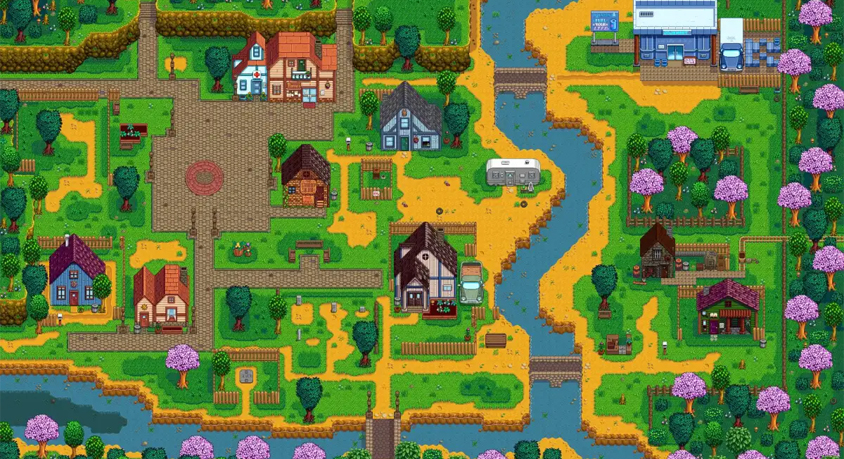
My friend Lila once stayed up till 3 a.m. arguing with a dev team about a single word: “truffle oil.” She was localizing Stardew Valley for Japanese players, and the literal translation—“torufuru oiru”—meant nothing to most people. “Japanese players don’t see truffle oil in grocery stores like we do,” she explained later. “If I just used the literal term, they’d have no clue why it’s worth so much in the game.” After hours of research, she landed on “karei na shokuhin” (“luxury food”)—and suddenly, that in-game item made sense. That’s the secret of game localization: it’s not just translating words—it’s translating vibes. And if you mess it up? Players feel like the game was never meant for them.
Let’s get real: localization is way harder than “swap English for Spanish.” Take double entendres, for example. Lila worked on an Animal Crossing character once—his name was “Jock,” and he made dumb gym jokes like “I lift so much, my muscles have muscles.” Translating that to French? “Jock” doesn’t mean “gym rat” there, so she renamed him “Rocky” (a nod to the movie, which is huge in France) and tweaked his jokes to reference local fitness culture. If she’d just kept “Jock” and the literal joke? Players would’ve stared at their screens like, “Huh?” Then there’s slang—English phrases like “chill out” or “no cap” don’t translate directly. For a Valorant line (“Chill, we got this”), she used “Relax, on a le dessus” in French (“Relax, we’re on top of it”)—it keeps the casual energy without forcing a word that doesn’t fit.
The biggest challenge? Cultural gaps. Lila once had to rewrite a Halloween event in a mobile game for Chinese players. The original had pumpkins and ghosts, but she swapped them for lanterns and “gui” (friendly spirits)—since Halloween’s not a big holiday there, but ghost stories and lanterns are part of Mid-Autumn traditions. “I didn’t want to erase the game’s vibe—I just wanted to make it feel familiar,” she said. Another time, she cut a reference to “baseball hot dogs” in a Fortnite quest for Indian players and replaced it with “vada pav” (a popular street food). The devs worried it would “change the game,” but players loved it—one even tweeted, “Finally, a game that gets our snacks!” Localization isn’t about “fixing” the game; it’s about bridging the gap between the dev’s world and the player’s.
And it’s not just about language—you need to know games. Lila’s a diehard Zelda fan, which helped when she localized Tears of the Kingdom. There’s a line where Link references “shrines,” and she knew to keep the term consistent with past Zelda games in Japanese—“jinja”—so longtime fans wouldn’t get confused. “If I’d used a new word, players would’ve gone, ‘That’s not a shrine—that’s something else,’” she said. She also plays the games she localizes—for hours. Once, she spent 8 hours in Cyberpunk 2077 just to make sure a side quest’s dialogue made sense in Spanish—she realized the original line about “hacking a cred chip” was too technical, so she simplified it to “crack the chip” (“romper el chip”) to keep the pace.
Here’s the tea: anyone can learn a language, but a good localizer is a cultural detective. Lila reads local gaming forums, watches TikTok trends in the markets she’s targeting, and even asks friends in those countries to test lines. For a Stardew Valley update, she asked her Japanese cousin to playtest the “luxury food” truffle oil line—he texted back, “Oh, that’s fancy! I’d save it for the market,” which meant she nailed it. She also works closely with devs—she once convinced a team to change a character’s outfit for Middle Eastern players: the original had a crop top, which some players might find uncomfortable, so they added a lightweight jacket. “It was a small change, but it made the game feel welcoming,” she said.
At the end of the day, localization is about respect. It’s saying, “We care enough about you to make this game feel like it was made for you—not just translated to you.” Lila still gets tweets from players: a Brazilian fan once told her the Animal Crossing jokes made her laugh so hard she woke her mom up; a Korean player said the Stardew Valley food terms helped her learn English. “That’s why I do this,” she told me. “It’s not about words—it’s about making someone feel seen.”
So next time you play a game in your native language and think, “This just clicks,” thank a localizer. They’re the ones who turned a foreign game into something that feels like home—one well-chosen word at a time.